
You don't need to climb on your roof to know if there's trouble. Most roof problems show clear visual signs from the ground — if you know what to look for. Here are five warning signs Northern California homeowners can identify in a 5-minute walk around their property, and what each one means for your home.
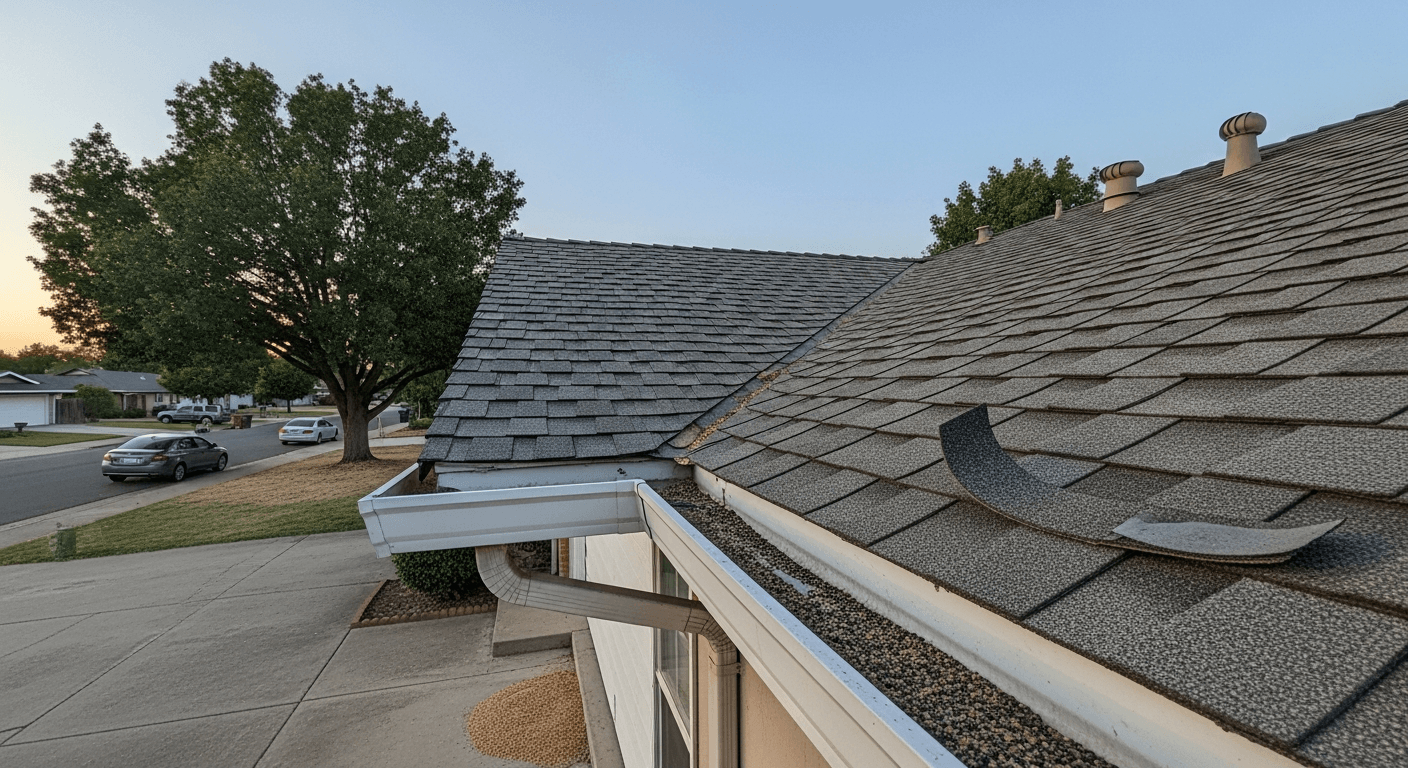
Sign #1: Granules piling up in gutters and at downspouts
Walk around your home and look at the base of each downspout. Is there a small pile of sand-like material on the ground? Look up at the gutters — can you see dark coarse granules accumulated in them?
That's your roof shedding its protective layer. Asphalt shingles have ceramic granules embedded in their surface — these provide UV protection, fire resistance, and color. As shingles age, granules loosen and wash down with rain. Some granule loss is normal across the roof's lifespan.
When to worry: heavy granule accumulation (more than a handful at any one downspout) in homes where shingles are 12+ years old. This indicates accelerated wear and the shingles are nearing end-of-life. Schedule an inspection within 30 days.
Sign #2: Visible sagging or dipping in the rooflines
Stand across the street from your home and look at the rooflines — the straight edges where two roof planes meet (ridges and valleys). Do they look perfectly straight, or do they dip, sag, or curve unexpectedly?
A sagging ridge can indicate:
- Structural framing damage (truss or rafter failure)
- Compromised roof deck (water damage to the OSB or plywood beneath shingles)
- Excessive snow or load damage from past storms
When to worry: any visible sagging on what should be a straight roofline. This is a structural concern — don't wait. Schedule an inspection within 7 days.
Sign #3: Curling, cracked, or missing shingles
From the ground or a second-story window, look at the visible roof surfaces. Are the shingles flat against the roof, or are corners and edges lifting and curling? Can you see any cracks running across shingles? Are any shingles missing entirely?
Curling typically comes from heat-aged shingles losing flexibility. Cracking comes from extreme thermal cycling. Missing shingles come from wind events.
When to worry: any of these on a roof 10+ years old. Curling is the first warning that shingles are reaching the end of their life. Cracked shingles are no longer waterproof. Missing shingles are an active leak waiting for rain. Schedule inspection within 14 days.
Sign #4: Dark stains, streaks, or discoloration
Look at the roof from across the street. Are there dark vertical streaks running down the surface? Are there areas significantly darker than the surrounding shingles?
Dark streaks are usually algae growth (gloeocapsa magma) — common in the region, especially on north-facing slopes that stay damp. Algae itself isn't immediately damaging but indicates the roof retains moisture longer than it should, which accelerates underlayment aging.
Darker patches of “missing” color can indicate shingles where granules have washed away, exposing the underlying asphalt mat. This is more serious — those shingles are no longer protecting your home effectively.
When to worry: widespread discoloration or streaking on a roof 12+ years old, or any visible areas where shingles look significantly different in color than their surroundings. Schedule inspection within 30 days.
Sign #5: Water stains on interior ceilings
This one isn't outside the home but it's a critical sign — look at the ceilings throughout your house, especially in the highest rooms or along exterior walls. Are there any brownish stains, water rings, or discoloration on ceilings or upper walls?
Water staining means your roof or flashing is leaking. By the time water shows on a ceiling, it's typically been finding its way in for weeks or months. The visible stain is the END of a damage path that started in the attic, traveled through insulation, and reached the drywall.
When to worry: ANY water staining is a sign of a leak. The longer you wait, the larger the damage path becomes. Schedule inspection within 7 days. Active or recent leaks usually warrant same-week response.
Bonus: look at your neighbors' roofs
If your home was built around the same time as neighboring homes, your roof is likely on a similar aging timeline. If multiple neighbors are reroofing within a 2-3 year window, your roof is probably on the same schedule. Pay attention to what's happening on similar homes nearby.
Frequently asked questions
Can I do basic roof maintenance myself?
Light maintenance like clearing gutters, cutting back overhanging branches, and removing visible debris is reasonable DIY. But anything that requires climbing on the roof — inspecting flashing, replacing shingles, resealing penetrations — should be done by a licensed roofer. Falls from roofs are one of the leading causes of home-improvement injuries.
How often should I check my roof for problems?
Visual yard-level checks every 2-3 months are reasonable, especially after major weather events (heavy winds, hailstorms, heavy rain). Full professional inspections should be annual for roofs 10+ years old, every 2 years for newer roofs.
Are roof problems covered by homeowner's insurance?
Sudden damage (storms, fallen trees, hail) is typically covered. Gradual wear and tear from age is not. Many storm damage claims in our service area cover 100% of repair or replacement cost after deductible — we coordinate directly with insurance adjusters during the claim process.
What's the difference between a roof inspection and a roof appraisal?
A roof inspection evaluates condition and identifies repair needs (typically free or low-cost from a roofing contractor). A roof appraisal estimates the roof's monetary value and remaining useful life (typically $300-$500 from a certified appraiser, used for high-value transactions or insurance disputes).
Do I need to replace my whole roof if just a few shingles are damaged?
No. Most localized shingle damage can be repaired without full replacement. Full replacement is only warranted when damage exceeds 30% of the roof area, when the underlayment beneath has failed, or when the roof is at end-of-life regardless of visible damage. KTN tells homeowners honestly which category their roof falls into.
What to do next
If you spotted any of these signs on your roof, schedule a free KTN inspection. We climb the roof, document everything with photos, evaluate what we find, and provide a written report with honest recommendations — repair, monitor, or replace.
No pressure, no commission-based upselling, no surprise pricing. If your roof can be repaired, we'll repair it. If it genuinely needs replacement, we'll show you exactly why.
Want a straight answer about your roof?
Free estimates across Placer County. Written estimate within 2-3 business days. No pressure, no upsells.