For homeowners in Auburn, Newcastle, Grass Valley, parts of Rocklin, and the foothill edges of Lincoln and Granite Bay, fire-rated roofing isn't optional — it's California Building Code. With wildfire season approaching, here's a plain-English breakdown of what Class A roofing actually is, where it's required, what it costs, and how to make sure your home meets current code.
What Class A fire-rated roofing actually means
The Class A rating is the highest fire-resistance classification in California's building code. To earn it, a complete roofing system — material, underlayment, edge details, and installation method — must withstand:
- Burning brand test: a flaming wood block placed on the roof surface
- Spread of flame test: flame applied to the surface for an extended period
- Intermittent flame test: repeated exposure to flame
- Burning embers (ember resistance): required in Wildland Urban Interface zones — the roof system must prevent burning embers from penetrating to the attic or interior
A material can be rated independently, but what matters is the COMPLETE SYSTEM. A Class A shingle installed over standard organic underlayment with combustible eaves isn't a Class A system. KTN installs every component to maintain the rating end-to-end.
Where Class A is required in Northern California
California has three regulatory zones that affect roofing requirements:
Local Responsibility Area (LRA): Most urban/suburban areas. Class A required on new construction and full replacements in moderate-to-high fire hazard zones.
State Responsibility Area (SRA): Cal Fire-managed land — primarily foothills and rural areas. Stricter requirements including ember-resistant ventilation, non-combustible underlayment, and specific edge details.
Very High Fire Hazard Severity Zone (VHFHSZ): Highest-risk areas. Full California Building Code Chapter 7A compliance required — Class A roofing, ember-resistant vents, sealed eaves, defensible space requirements, and additional inspection.
For KTN's service area:
- Auburn — large portions in VHFHSZ, all properties subject to Chapter 7A
- Newcastle — most properties in SRA, Chapter 7A applies
- Grass Valley — virtually all properties in VHFHSZ
- Rocklin (eastern edge) — some properties in SRA
- Lincoln, Granite Bay — generally LRA but with fire-hazard zone restrictions
- Roseville — primarily LRA with limited fire-zone areas
Cal Fire publishes maps showing exactly which properties fall in which zones. KTN consults these maps during every estimate so you know your specific requirements.
Class A roofing material options
You have multiple paths to Class A:
Asphalt composition shingles (Class A rated): Most modern architectural shingles from Owens Corning, GAF, and CertainTeed carry Class A ratings when installed correctly. Most affordable Class A option — $9-15 per sq ft installed. Lifespan: 25-30 years in the region's climate.
Concrete and clay tile: Naturally Class A. Excellent fire performance, very long lifespan (40-50+ years), heavier weight that requires structural verification. Cost: $15-25 per sq ft installed.
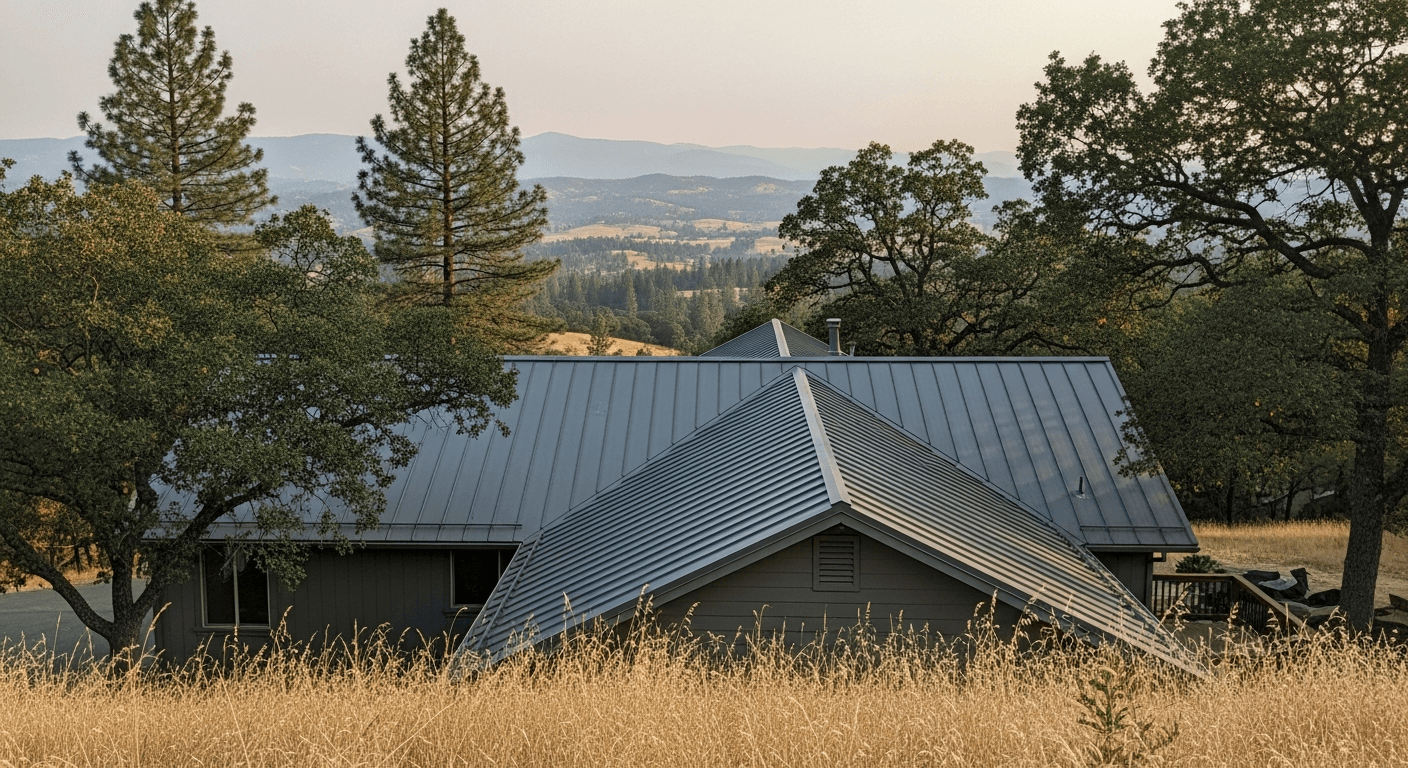
Standing seam metal: Class A and Class A1 rated. Best performance against ember-driven fires (smooth surface sheds embers vs. catching them). 50+ year lifespan. Cost: $18-28 per sq ft installed.
Stone-coated steel: Combines the look of shingle or tile with metal's fire resistance and longevity. Excellent for foothill aesthetics. Cost: $14-22 per sq ft installed.
What's NOT Class A and what's prohibited:
- Wood shake and wood shingle — prohibited in most fire zones
- Older asphalt shingles without Class A rating — not allowed on new installations
- Built-up tar roofing without Class A composite cap — restricted
Beyond the shingle — what else the code requires
Class A roofing material alone isn't enough in Chapter 7A zones. Full compliance requires:
- Ember-resistant ventilation: standard roof vents replaced with screened, baffled vents that block burning embers
- Non-combustible underlayment: at eaves and valleys, often extending up the roof
- Sealed eaves and soffits: preventing ember entry into attic from below
- Class A-rated valleys and ridges: flashing details that maintain the fire rating at vulnerable junctions
- Setback from combustible materials: roof-to-wall transitions must maintain non-combustible gaps
KTN handles all of this on Chapter 7A projects. It's not just installing fire-rated shingles and calling it done — every detail matters.
Insurance implications
California homeowners' insurance is increasingly tied to fire-rating compliance. In high-risk areas:
- Most carriers require Class A roofing as a condition of coverage
- Some carriers offer discounts for full Chapter 7A compliance
- Roofs that don't meet code may be denied coverage, or claims may be limited
- Cal FAIR Plan (state-backed insurance for high-risk areas) requires Class A on new policies
If your insurance has been canceled or renewed at significantly higher rates, your roof's fire rating might be a factor. KTN can provide a rating verification letter for your insurer.
What about older homes?
If your home was built before current fire-rating requirements, you typically don't have to replace your roof just because the code changed. But:
- At time of replacement, new Class A requirements apply
- At time of major repair (over 50% of roof area), Class A requirements may apply
- Insurance carriers may require Class A compliance regardless of code status to maintain coverage
If you're planning a roof replacement in any KTN service area, expect Class A as the standard. We'll walk you through your specific requirements during your free estimate.
Frequently asked questions
Are all asphalt shingles Class A rated?
No. Only specific shingle product lines from major manufacturers (Owens Corning Duration, GAF Timberline HDZ, CertainTeed Landmark, etc.) are Class A rated. Many lower-end “builder grade” shingles are Class B or Class C. We verify rating on every product we install.
How much more does Class A roofing cost than non-rated?
For asphalt shingles, the cost difference is minimal — typically 5-10% more than the cheapest non-rated options. For complete Chapter 7A compliance (ember-resistant venting, non-combustible underlayment, sealed eaves), expect 15-25% more than basic Class A shingle installation due to additional materials and labor.
Do I need a permit for fire-rated roofing replacement?
Yes — most jurisdictions in our service area require permits for any roof replacement, with stricter inspection requirements in Chapter 7A zones. KTN pulls permits and coordinates inspections on your behalf for every replacement project.
What if my insurance carrier requires Class A but my city doesn't?
Install to insurance requirements regardless of code. Most California carriers in fire-prone areas now require Class A as a condition of coverage, and dropping coverage is more expensive than upgrading the roof. We can provide written documentation of the Class A rating for your insurer.
How do I find out if my property is in a Cal Fire WUI zone?
Cal Fire publishes interactive maps at osfm.fire.ca.gov showing Fire Hazard Severity Zones. KTN looks up your specific address during the inspection and provides written documentation of your zone classification along with the estimate.
Get a free Class A roofing estimate
Wildfire season starts in May and extends through October across Northern California. The right time to address roof fire-rating is BEFORE fire conditions arrive, not during evacuation orders. KTN provides free Class A roofing estimates across Placer and Nevada counties. We pull current Cal Fire zone information for your specific address, evaluate your existing roof against current code, and provide written estimates within 2-3 business days.
Want a straight answer about your roof?
Free estimates across Placer County. Written estimate within 2-3 business days. No pressure, no upsells.